
Inside a Lithium Battery Pack Line: The Machinery Behind Every Pack
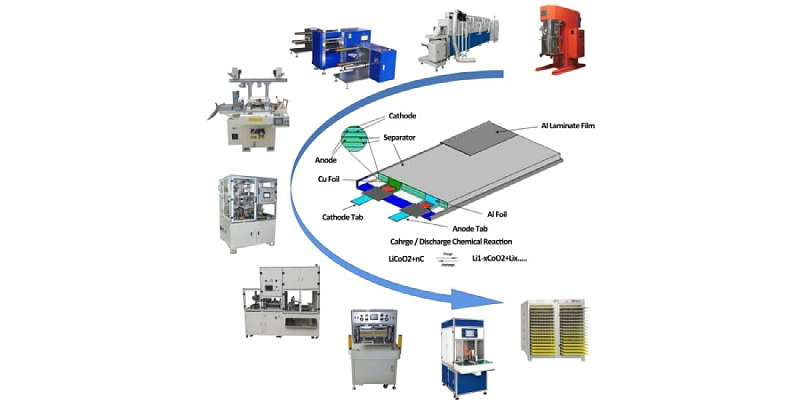
A lithium battery pack is built by a chain of specialized machines, not by hand. Together they decide the consistency, safety and cost of the packs a factory ships.
Cell Sorting and Welding
Cell sorting and inspection machines test capacity, internal resistance and voltage, then group cells so every pack starts from matched units. Welding machines — ultrasonic, laser or resistance — then join cells to busbars, forming the series and parallel connections that carry the pack's current.
Module, BMS and Enclosure Equipment
Module assembly machines position cells into frames and can add liquid cooling plates or air channels. BMS integration equipment places sensors, control units and wiring harnesses, then programs and calibrates the board. Enclosure machines seal, rivet or screw the modules into a protective housing.
Testing, Traceability and Packaging
Charge-discharge testers, insulation resistance testers and functional stations verify performance before shipment. Machine vision systems check welds and alignment, serialization keeps every unit traceable, and labeling and packaging machines close the line.
Where UFO-POWER Stands
UFO-POWER has 25 years of professional technical expertise in the R&D and manufacturing of full-scenario energy storage and drone batteries. The equipment is only as good as the process discipline behind it — matched cells, a calibrated BMS and verified packs — and that discipline is what our energy storage systems and battery packs are built on.