
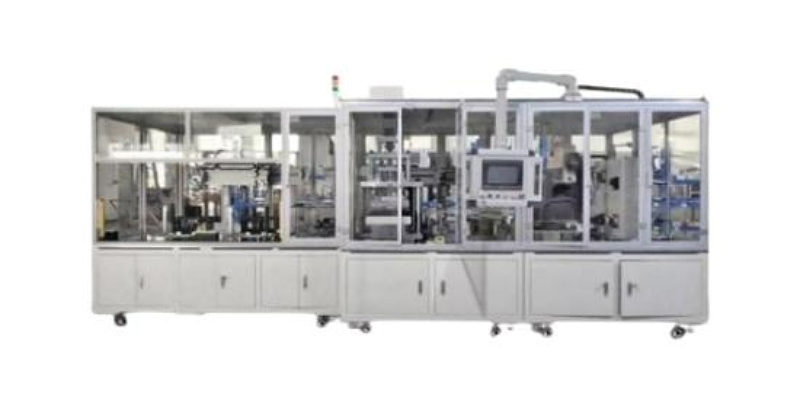
Solid-State Battery Assembly Lines: What Is Changing in Cell Manufacturing
Solid-state batteries swap the flammable liquid electrolyte of lithium-ion cells for a solid one, promising higher safety, energy density and cycle life. That shift is forcing cell assembly equipment to change fast.
A Different Assembly Logic
Lithium-ion lines handle a liquid that soaks into a separator. Solid-state lines must coat, press or extrude a solid electrolyte into a thin, uniform layer, then stack and laminate it against the electrodes — all inside a dry room or inert chamber, because moisture and oxygen degrade these materials.
The Core Process Steps
Electrode preparation — coating, drying and calendering to controlled density.
Electrolyte layer formation — casting or pressing to a uniform thickness.
Layer assembly — robotic stacking and lamination with precise alignment.
Sealing — hermetic pouch, film or rigid casing.
Formation and testing — initial cycles, capacity and impedance checks.
Where UFO-POWER Stands
UFO-POWER has 25 years of professional technical expertise in the R&D and manufacturing of lithium batteries. The habits solid-state production demands — controlled environments, tight tolerances and in-line verification — already shape our energy storage systems, inverters and battery packs.