
From Lab to Gigafactory: How a Lithium Cell Fabrication Plant Grows
No lithium cell plant opens at full speed. The path from a bench-top concept to a full-scale plant runs through predictable stages, each of which decides how fast a factory reaches its quality and cost targets.
Materials Research and Prototyping
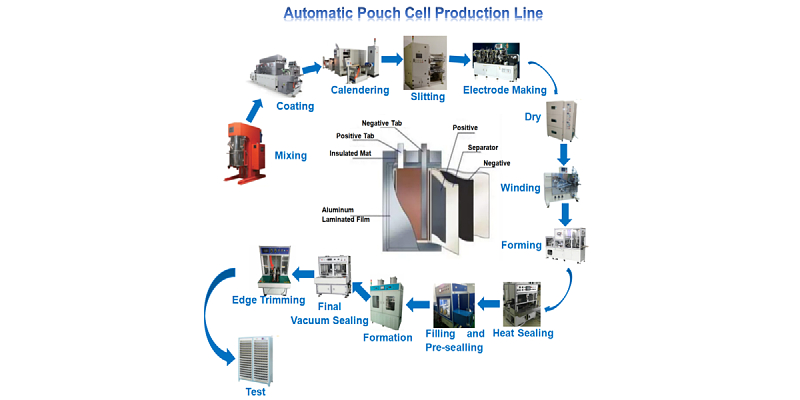
Engineers first study electrode materials, electrolytes and separators for higher energy density and safety. Promising designs move to small pilot lines, where coating, winding and formation are tested on a few hundred cells — problems found here are cheap to fix.
Pilot Line and Process Optimization
A pilot line then approximates full-scale conditions. Coating, calendering, winding and sealing parameters are fine-tuned inside quality control loops, and yield and consistency are won through steady iteration.
Automation and Scale-Up
As processes stabilize, plants adopt automation, robotics and AI-based inspection to raise precision and cut scrap. Only then does expansion begin — longer lines, higher throughput and quality assurance at every station.
Diversification, R&D and Global Reach
Mature plants widen their range to consumer, EV and energy storage cells, with flexible processes for customization. R&D centers and OEM collaboration keep technology current, while international standards govern market access.
Where UFO-POWER Stands
UFO-POWER has 25 years of professional technical expertise in the R&D and manufacturing of full-scenario energy storage and drone batteries. Cells are matched, processes verified and every pack tested before shipment.