
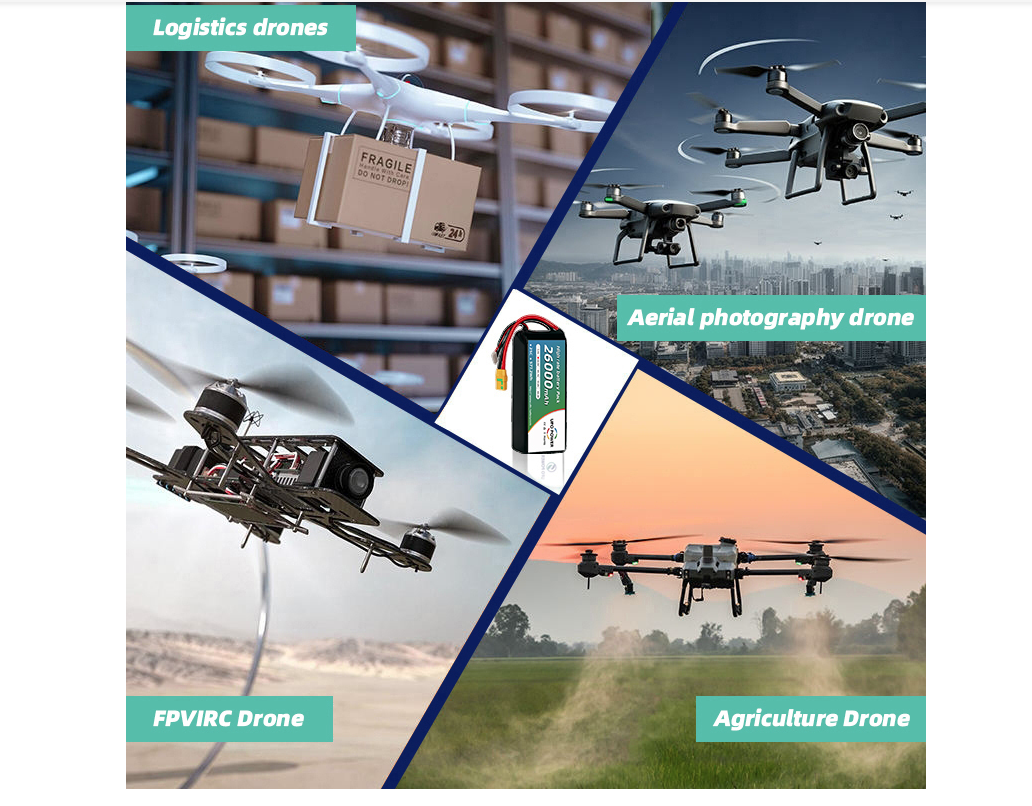
Specifications and precautions for using high-discharge-rate semi-solid-state drone lithium batterie
With the widespread adoption of drones for aerial photography, surveying, and industrial inspections, high-discharge-rate, long-cycle-life (500 cycles) liquid/semi-solid lithium batteries have become the mainstream power source. Semi-solid batteries combine the mature manufacturing processes of liquid lithium-ion batteries with the safety advantages of solid-state electrolytes, offering both high-current discharge capabilities and long cycle life—ideal for high-speed flight and heavy-load operations. However, their high-discharge characteristics and unique semi-solid structure impose strict requirements across the entire lifecycle, including storage, charging/discharging, flight, and maintenance. Improper handling can significantly degrade cycle life and lead to safety hazards such as swelling or thermal runaway. This article outlines usage precautions across all scenarios—balancing flight endurance with safety—based on the specific characteristics of these high-rate, 500-cycle drone batteries.
I. Charging: Strict Parameter Control to Prevent Cell Damage
While high-rate drone batteries support high-current fast charging, the stability of the internal electrolyte interface in semi-solid cells is lower than that of standard lithium batteries; incorrect charging is the primary cause of cell degradation and reduced cycle life. First, always use the original manufacturer-supplied balanced charger; strictly avoid mixing in high-current industrial fast chargers or low-quality, generic chargers. Such devices often have unstable voltage and current outputs, which can widen the voltage differential between individual cells. A single instance of high-voltage overcharging can cause immediate capacity loss and drastically shorten the battery's cycle life. The standard charging current should be kept between 0.5C and 1C. Do not fast-charge batteries immediately after heavy-load flights; allow them to cool to approximately 25°C before charging.
Monitor cell voltage in real-time during charging; the voltage of a single cell must not exceed 4.2V. Overcharging semi-solid batteries triggers the decomposition of the internal electrolyte, generating gas that causes the battery to swell. Avoid charging in direct sunlight, inside enclosed cases or bags, or near high-temperature equipment; an ambient temperature of 10–30°C is optimal. Never leave the battery unattended while charging; if heating, swelling, or an unusual odor is detected, immediately cut off the power and move the battery to an open, fire-resistant area. Avoid storing the battery fully charged for extended periods; disconnect the power promptly once charging is complete. Prolonged storage at full charge accelerates the aging of the SEI (Solid Electrolyte Interphase) layer, potentially reducing the cycle life from the rated 500 cycles to fewer than 300.
II. Flight and Discharge: Manage Loads and Avoid Extreme Conditions
High-discharge-rate batteries can deliver high currents instantaneously, making them suitable for rapid acceleration, high-altitude wind resistance, and heavy-payload operations. However, sustained discharge beyond rated limits causes rapid temperature spikes, damaging the semi-solid composite electrolyte structure. Ensure proper load matching before takeoff and do not exceed the drone's rated payload. Aggressive maneuvers—such as prolonged hovering at full throttle, high-speed dives, or violent low-altitude flying—result in sustained high-current discharge that can push battery temperatures above 60°C. High temperatures cause a rapid rise in internal resistance and irreversible capacity loss.
Monitor battery voltage and temperature alerts in real-time during flight. If a single cell's voltage drops too rapidly or a low-voltage warning appears, return to base and land immediately; strictly avoid forced low-altitude operations or delaying the return. Deep discharge severely damages semi-solid cells; maintain a minimum single-cell voltage of 3.6V and avoid fully depleting the battery. Pre-heat the battery before operating in cold environments; temperatures below 0°C significantly reduce discharge capability, and forced high-current flight can lead to sudden voltage drops or crashes. In winter, use a battery thermal sleeve and pre-heat the battery to above 15°C before takeoff. After landing, do not immediately seal or store a hot battery; allow it to cool in a well-ventilated, open area, as storing a hot battery in an enclosed space can easily lead to dangerous heat accumulation.
III. Storage: Temperature and Humidity Control, Periodic Maintenance
Proper storage management is crucial to achieving the full 500-cycle lifespan. When the battery is idle for long periods, do not store it fully charged or fully depleted. The optimal storage charge level is 40%–60%; this range ensures the most stable chemical state within the cells, effectively minimizing self-discharge and aging. Maintain a storage temperature of 10–25°C and keep the battery away from high-heat sources such as heaters, engines, or vehicle cabins exposed to direct sunlight. Avoid humid or rainy environments; moisture ingress at the terminals can cause short circuits and corrosion, damaging the battery cells and protection board.
For long-term storage, check the battery voltage monthly. If the voltage drops below 3.7V per cell, recharge it to the recommended storage level immediately; leaving the battery in a depleted state for over two months can cause irreversible capacity loss, rendering the battery unusable. Store the battery in a dedicated flame-retardant case, keeping it separate from metal tools or sharp objects to prevent punctures to the cell packaging, which could lead to leakage or short circuits. Do not store the battery in a sealed container while it is hot; allow it to cool down after use before storing to minimize the risk of internal gas buildup and swelling.
IV. Daily Maintenance and Damage Prevention to Extend Cycle Life
Semi-solid high-discharge-rate batteries feature a relatively soft casing, making the internal solid electrolyte layer susceptible to damage from physical stress. Avoid crushing, dropping, or puncturing the battery during handling and use, and ensure adequate cushioning during transport. Even minor impacts that leave no visible external damage can cause internal electrode fractures, potentially leading to sudden voltage drops during flight. Inspect the battery's exterior before and after each use; discontinue use immediately if you observe casing swelling, leakage, terminal corrosion, or damage to the outer wrapping—do not fly with such a battery.
Once the battery has reached 400 cycles, reduce flight loads and avoid aggressive maneuvers. As internal resistance increases, high-current discharge can easily cause overheating; the remaining cycle life should be utilized under gentle operating conditions. Clean the battery surface only with a dry cloth; do not rinse with water or soak in alcohol, as liquid ingress into the protection board can cause short circuits. Do not discard retired batteries casually; the internal electrolyte is corrosive. Batteries must be sent to professional lithium battery recycling facilities for proper disposal to prevent risks of spontaneous combustion or environmental pollution.
V. Emergency Safety Procedures and Prevention of Thermal Runaway
Although semi-solid batteries offer superior safety compared to fully liquid lithium batteries, the risk of thermal runaway remains under extreme operating conditions. If the battery becomes abnormally hot, emits an unusual odor, or experiences a rapid voltage drop during flight, immediately cut off power and perform an emergency landing away from crowds and buildings. In the event of a battery fire during charging or storage, do not pour water directly on it; instead, use a dry powder fire extinguisher or cover it with sand or soil to cut off the oxygen supply. Avoid direct skin contact with damaged or leaking batteries, as the electrolyte is corrosive; if contact occurs, rinse immediately with clean water.
In summary, the service life and flight safety of high-discharge-rate liquid and semi-solid-state drone lithium batteries depend entirely on proper charging, discharging, storage, and operational practices. Only by strictly controlling charging current and voltage, avoiding extreme temperatures, preventing overcharging, over-discharging, and rough handling, and ensuring regular maintenance and proper storage can the core advantages of semi-solid-state batteries—such as high discharge rates and long cycle life—be fully realized. This approach not only reduces battery replacement costs but also prevents drone flight accidents at the source.